nlpcourse.ai logo
NLP Courses with Real Workflows
logo
HomeBlogContact Us
Banner background

Transformer Model Explained with Architecture, Examples, and Types

  1. Home
  2. Blog
  3. Transformer Model Explained with Architecture, Examples, and Types
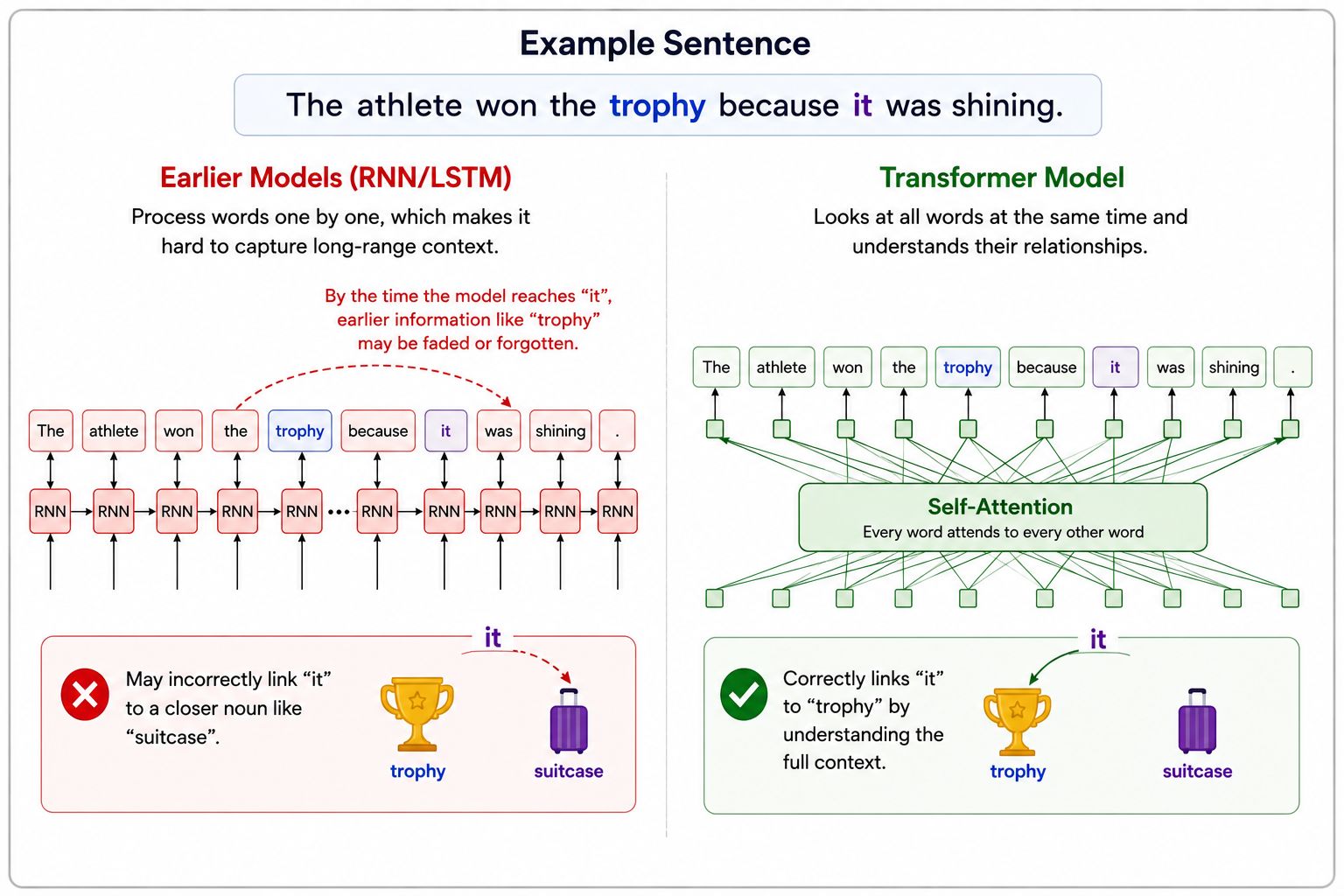
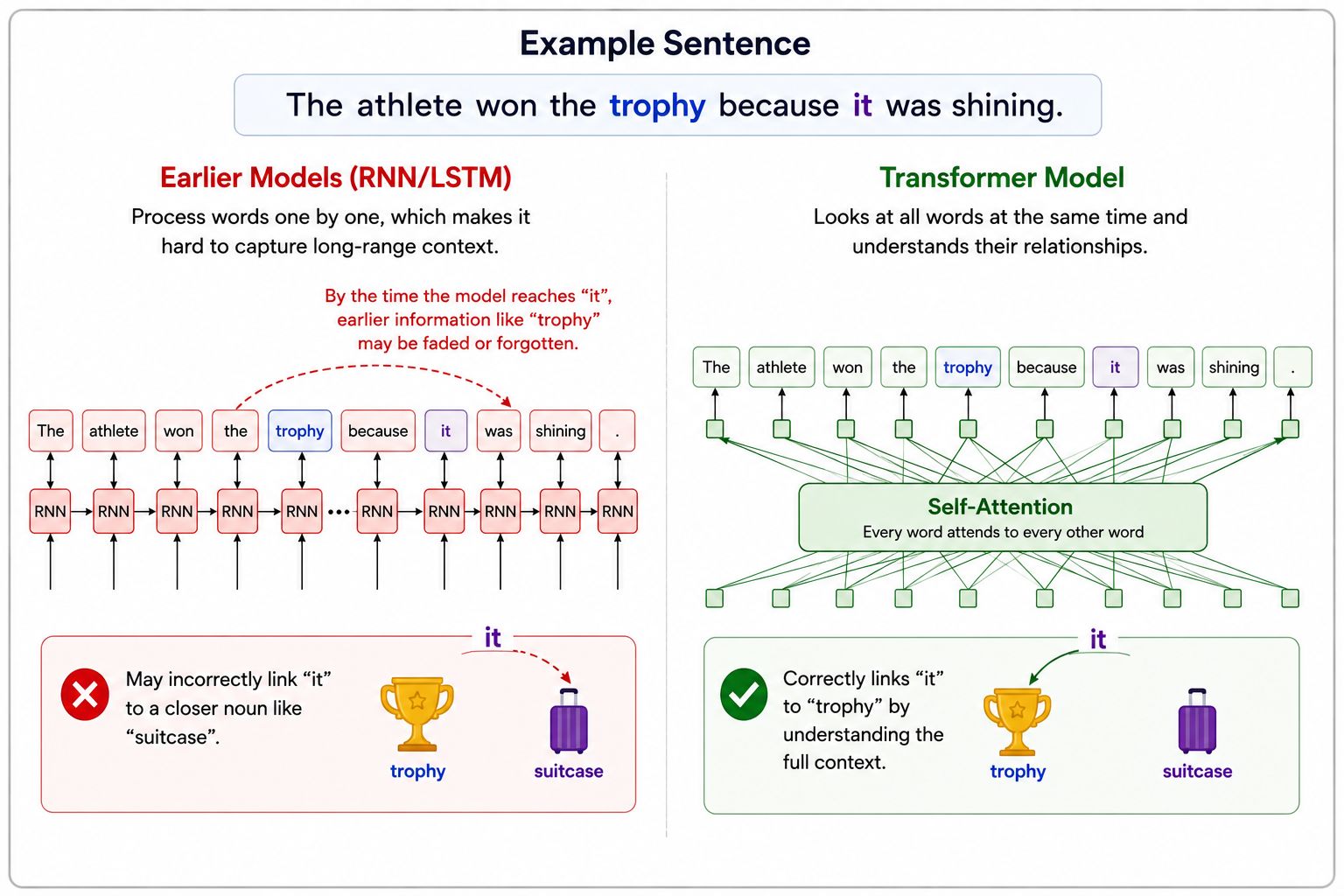
Infographic comparing how earlier RNN and LSTM models and Transformer models understand context in a sentence. The visual shows that RNNs and LSTMs process words sequentially and may incorrectly link the pronoun “it” to “suitcase,” while the Transformer mInfographic comparing how earlier RNN and LSTM models and Transformer models understand context in a sentence. The visual shows that RNNs and LSTMs process words sequentially and may incorrectly link the pronoun “it” to “suitcase,” while the Transformer m
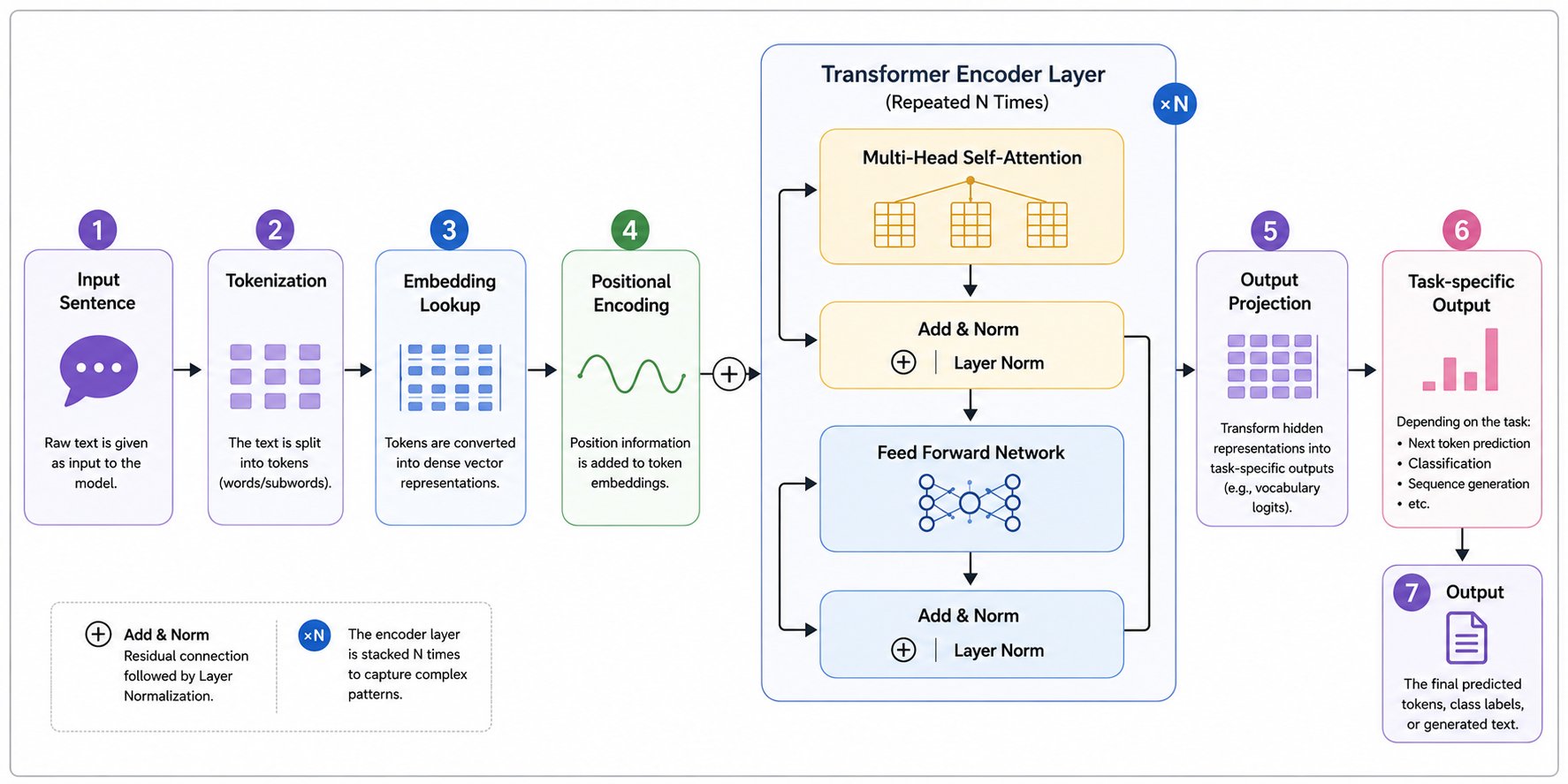
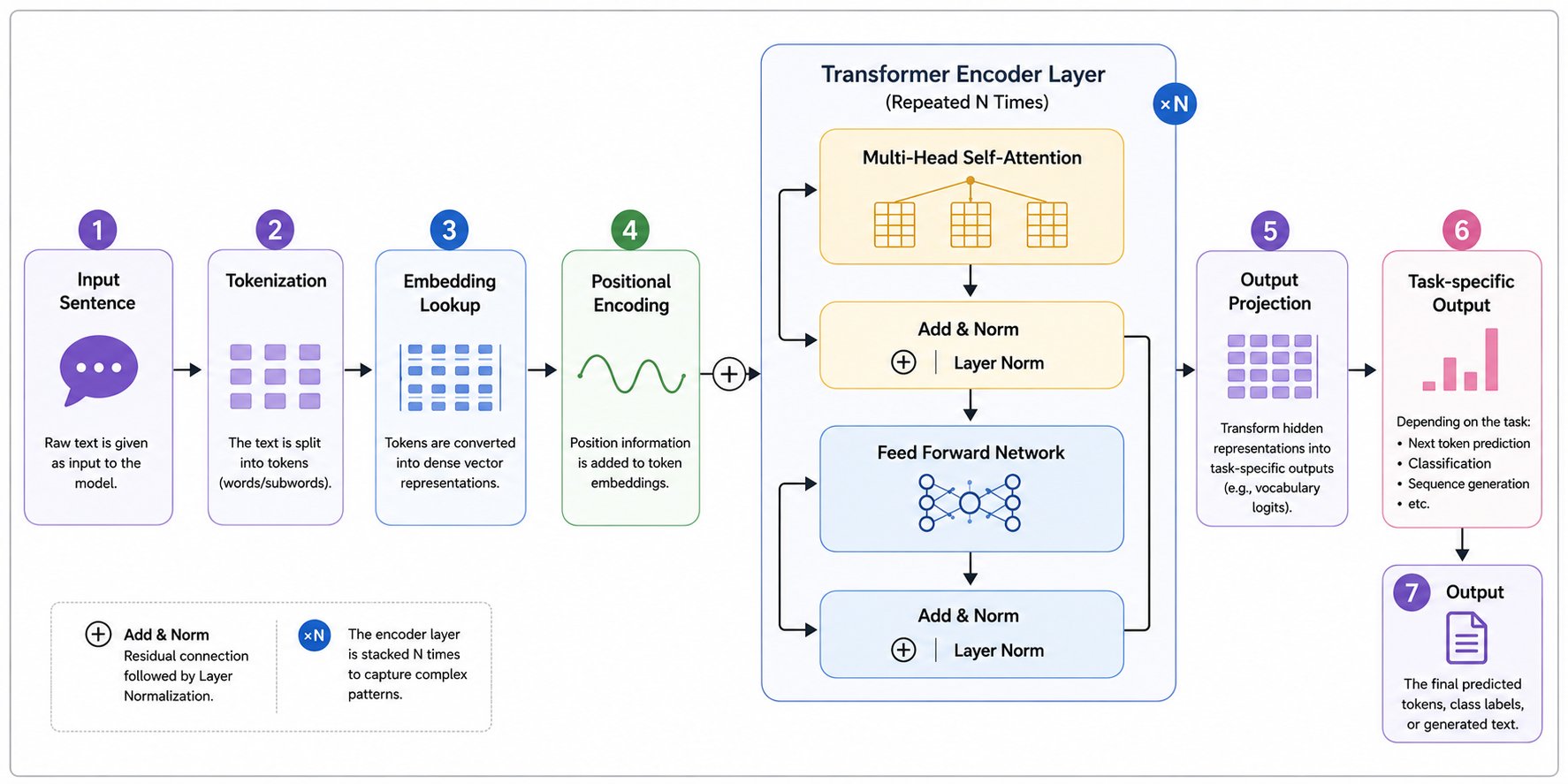
Transformer encoder workflow diagram showing the sequence from input sentence, tokenization, token embeddings, positional encoding, repeated encoder layers with multi-head self-attention and feed forward network, output projection, and task-specific outpuTransformer encoder workflow diagram showing the sequence from input sentence, tokenization, token embeddings, positional encoding, repeated encoder layers with multi-head self-attention and feed forward network, output projection, and task-specific outpu
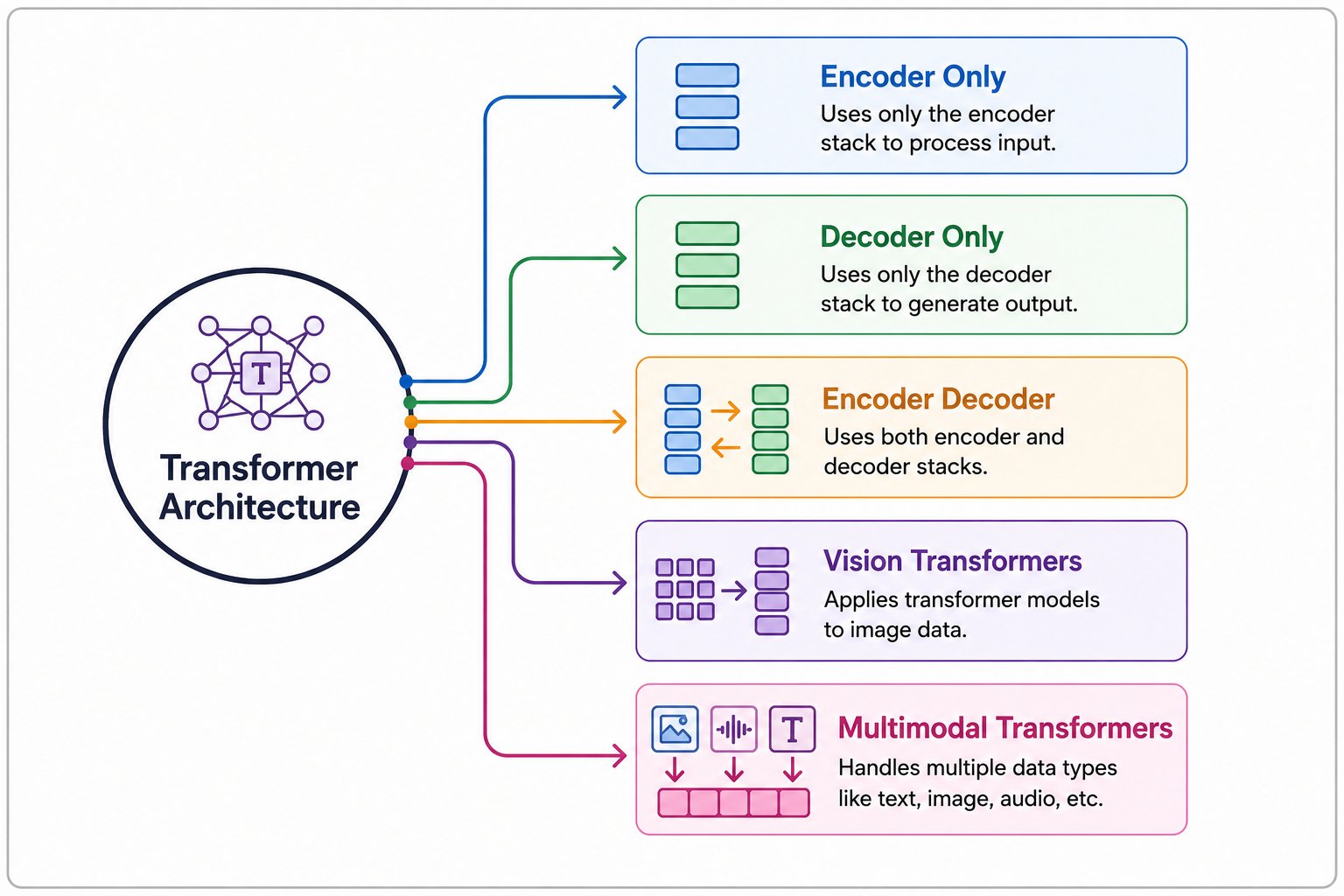
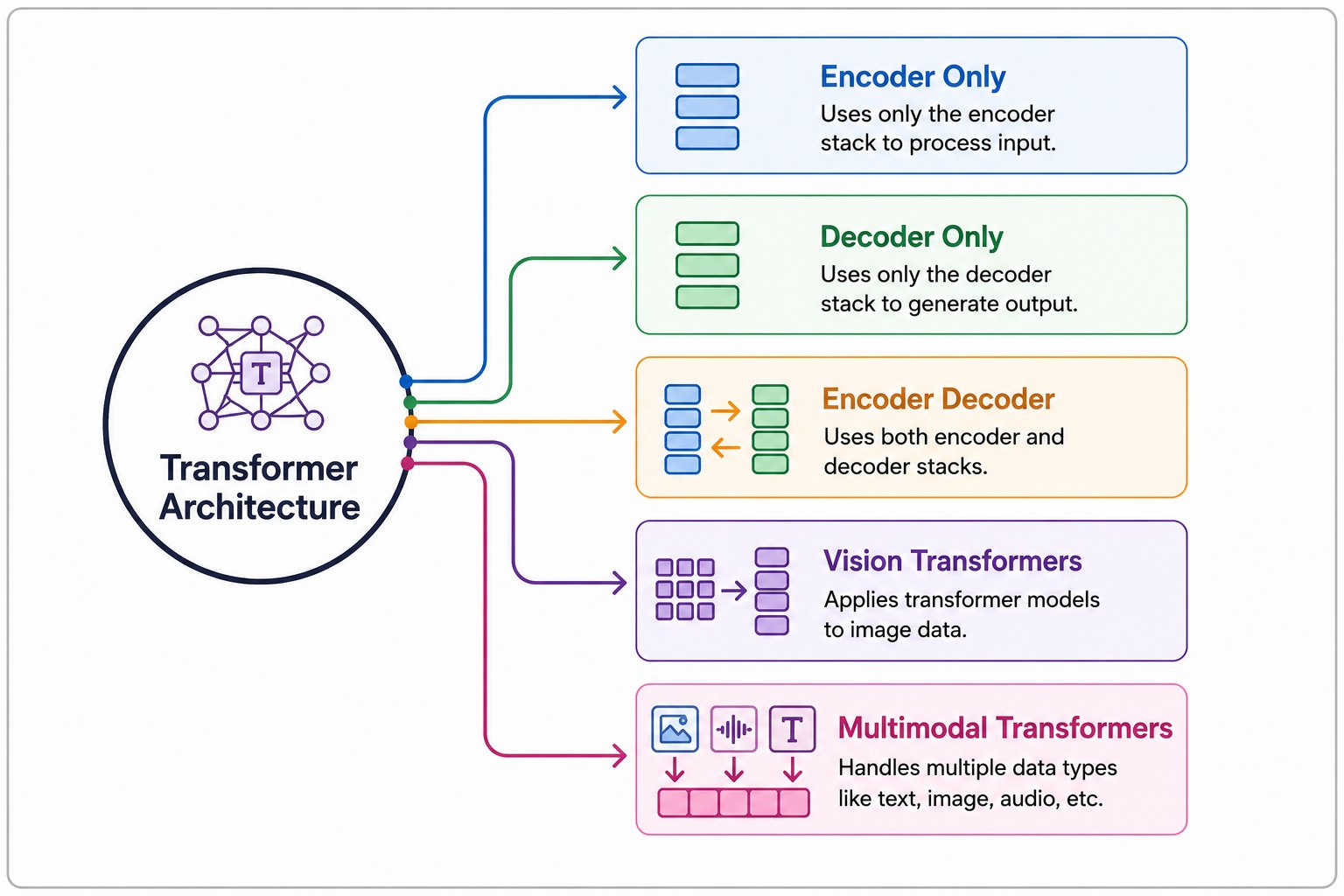
Infographic showing the different types of Transformer architecture, including Encoder Only, Decoder Only, Encoder Decoder, Vision Transformers, and Multimodal Transformers, connected to a central Transformer Architecture node with a clean layout and greyInfographic showing the different types of Transformer architecture, including Encoder Only, Decoder Only, Encoder Decoder, Vision Transformers, and Multimodal Transformers, connected to a central Transformer Architecture node with a clean layout and grey
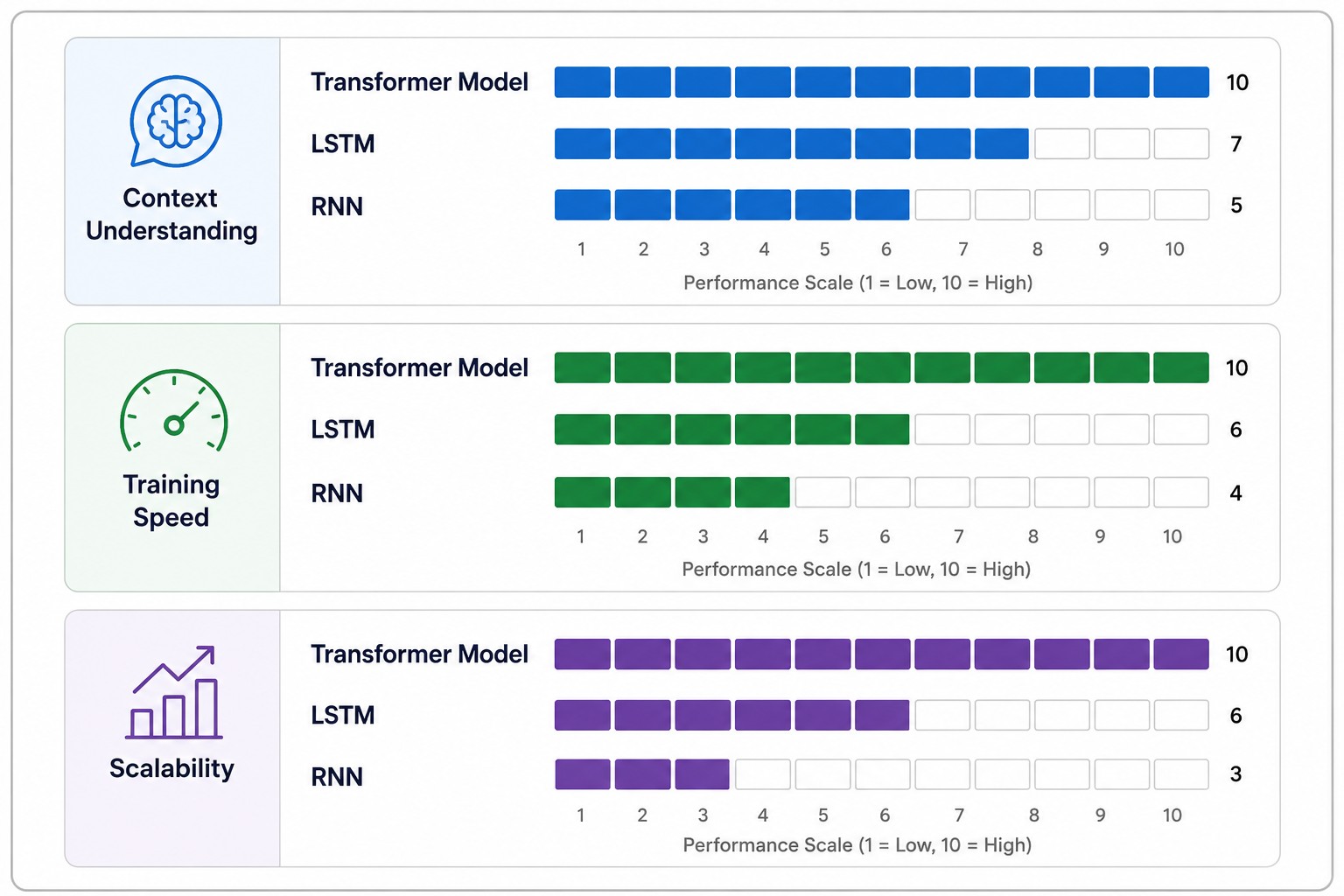
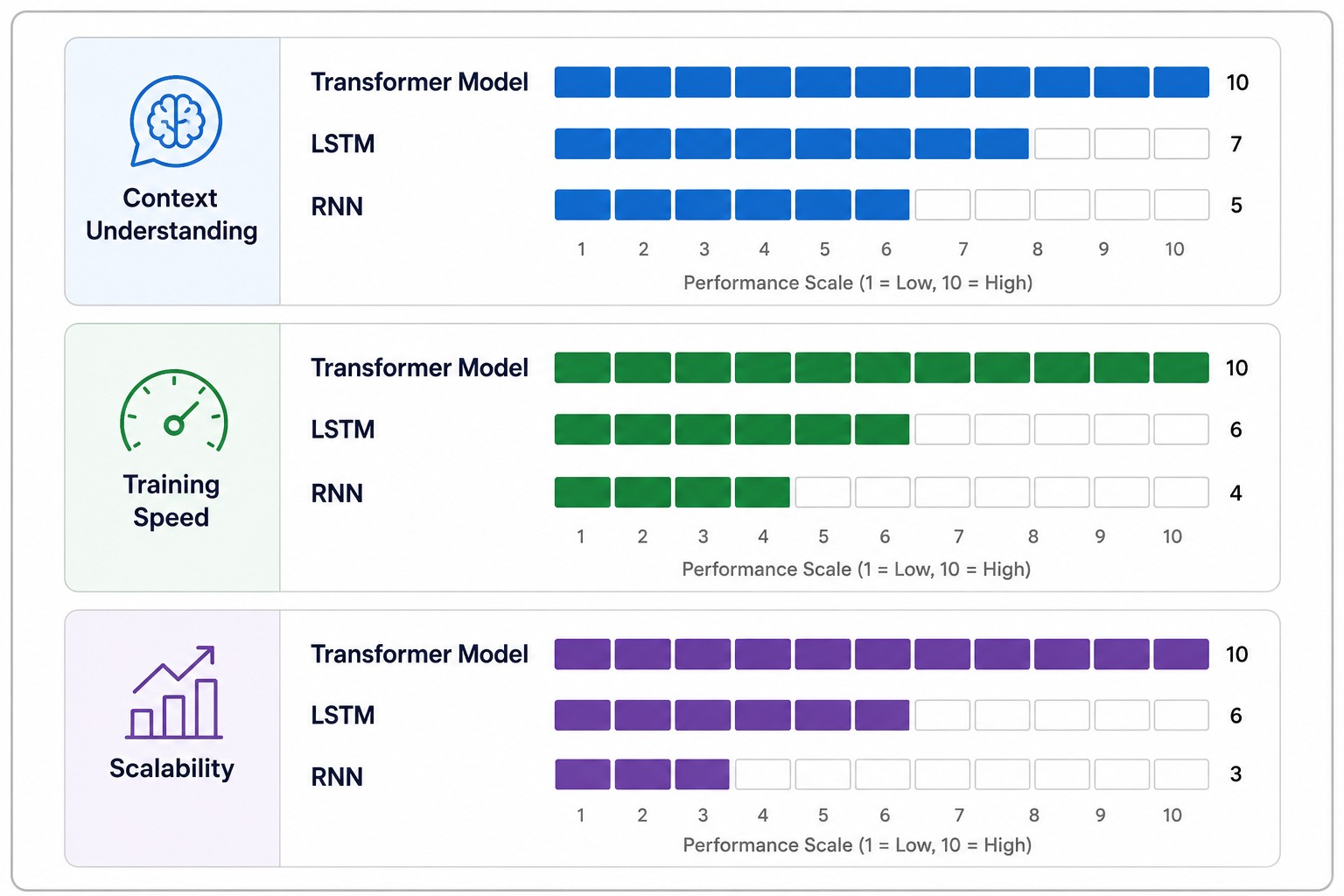
Comparison infographic showing the performance of Transformer Model, LSTM, and RNN across three key metrics: Context Understanding, Training Speed, and Scalability. The visual uses horizontal bar charts to highlight that Transformer models outperform LSTMComparison infographic showing the performance of Transformer Model, LSTM, and RNN across three key metrics: Context Understanding, Training Speed, and Scalability. The visual uses horizontal bar charts to highlight that Transformer models outperform LSTM
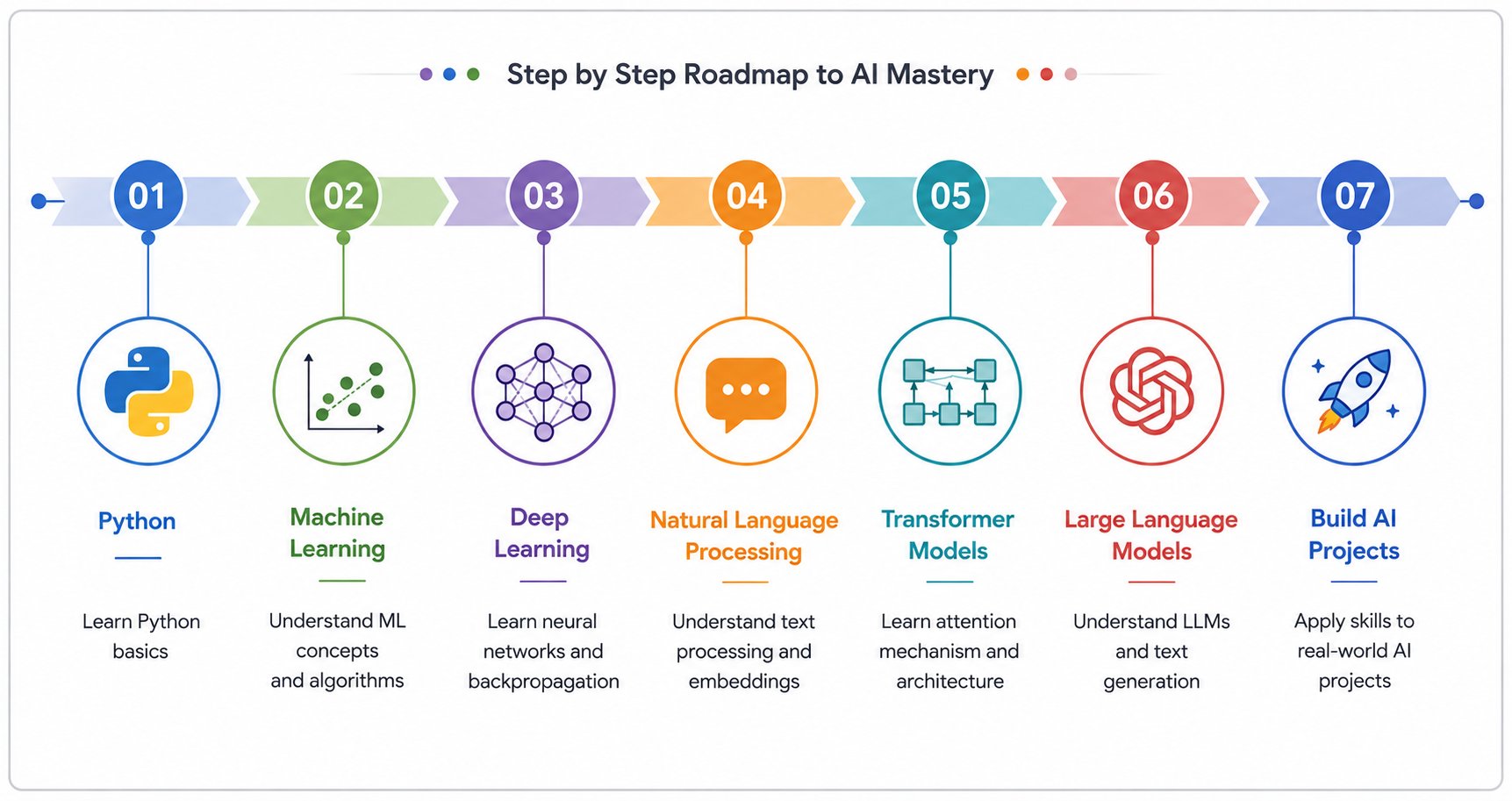
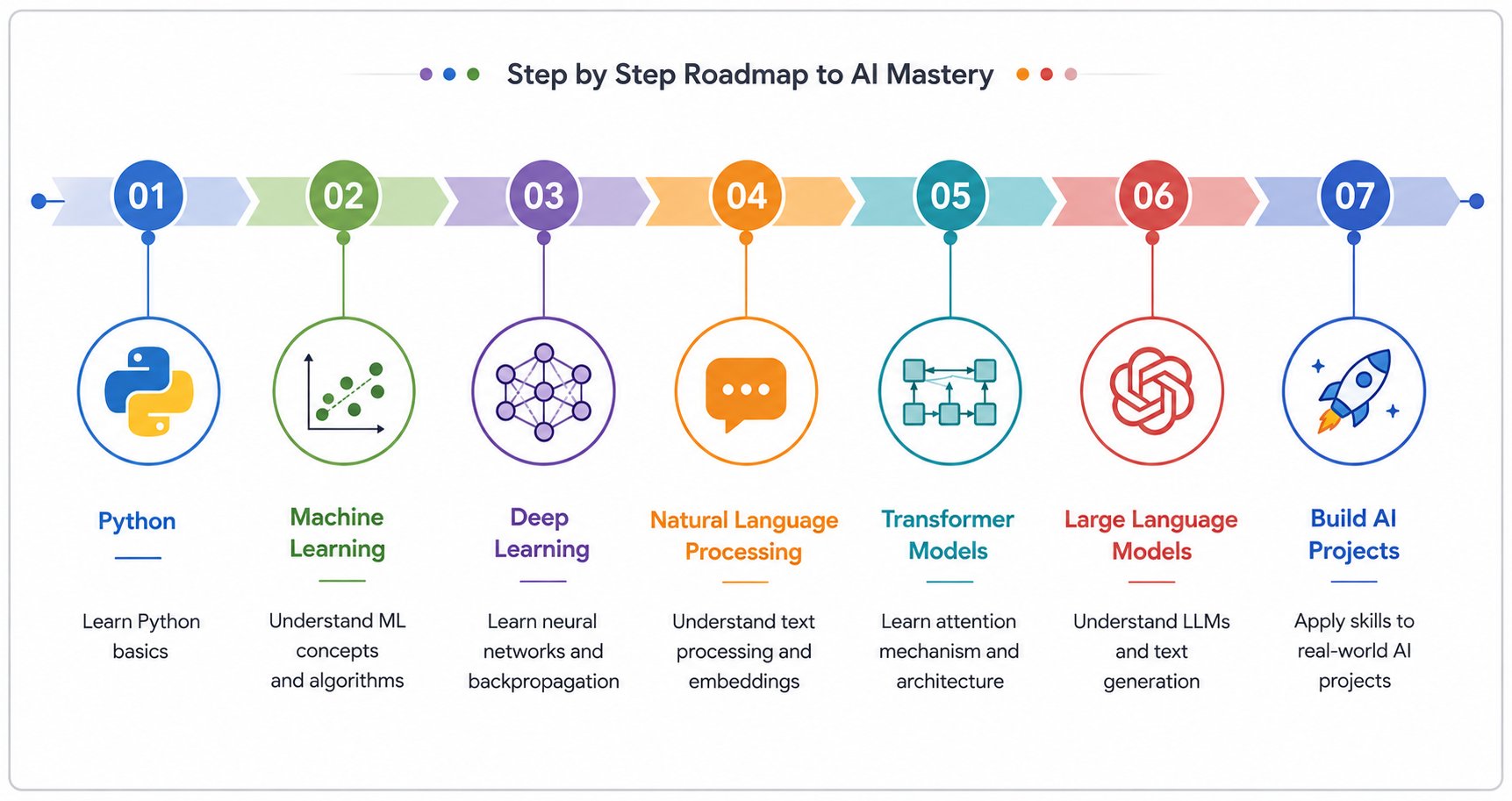
Horizontal AI learning roadmap infographic showing a step-by-step path from Python to building AI projects. The roadmap covers seven stages: Python, Machine Learning, Deep Learning, Natural Language Processing, Transformer Models, Large Language Models, aHorizontal AI learning roadmap infographic showing a step-by-step path from Python to building AI projects. The roadmap covers seven stages: Python, Machine Learning, Deep Learning, Natural Language Processing, Transformer Models, Large Language Models, a

Frequently Asked Questions

General

Popular Blogs

What Is LangChain? How It Works and Why Developers Use It
May 20th, 2026

What Is LangChain? How It Works and Why Developers Use It

What is LangChain? Learn how this framework works, its core components, use cases, benefits, and how it helps developers build LLM-powered applications.

Read More

  • What is Cosine Similarity? A Complete Guide to Vector Math

    What is Cosine Similarity? A Complete Guide to Vector Math

    What is cosine similarity and how does it work? Learn the cosine similarity formula, Python implementations using sklearn, and how it compares to dot product.

    Read More
  • NLP Neuro Linguistic Programming: Complete Guide

    NLP Neuro Linguistic Programming: Complete Guide

    Learn what is NLP Neuro Linguistic Programming, its principles, techniques, AI connections, applications, benefits, and future role in language intelligence.

    Read More
  • What is Language Processing AI: Everything You Need to Know

    What is Language Processing AI: Everything You Need to Know

    Learn what language processing AI is. Learn how agentic systems work, real-life applications in healthcare/business, and why understanding NLP matters now.

    Read More
nlpcourse.ai — explore NLP tools and real-world use cases